Showing posts with label stamp. Show all posts

Thursday, April 24, 2014

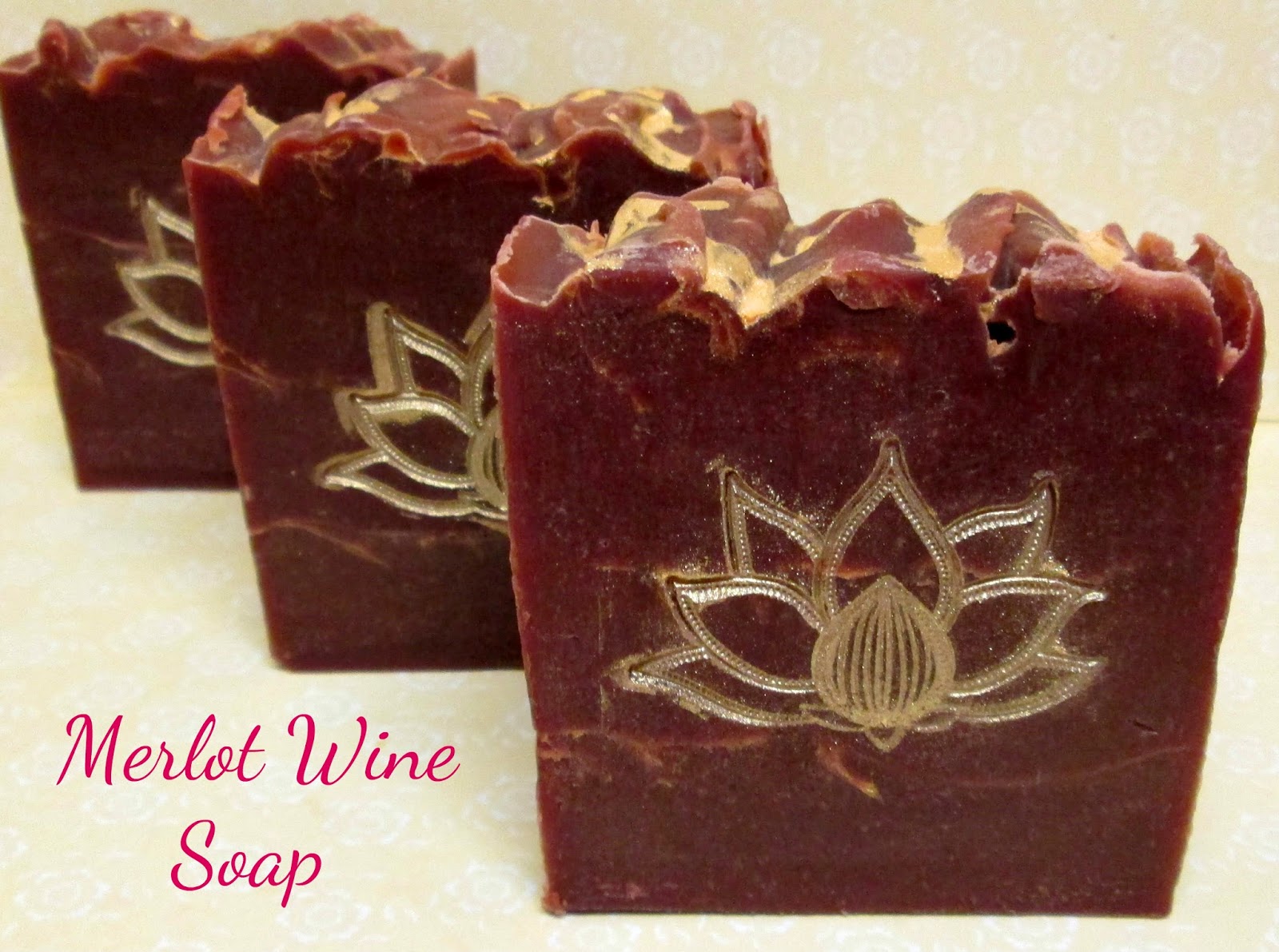
Merlot Wine Soap

I'm finally getting around to something that I've been meaning to try for a while now - wine soap!

Making wine soap is a lot like making beer soap, and wine and beer bring similar qualities to the bars. The natural sugars in each help to boost the lather, making it fluffy, creamy, and luxurious. Both are wonderful additives, and they add interest to a batch.

Using alcohol in soap can be tricky, though. Alcohol can cause the lye solution to bubble up like a volcano eruption. And it can make the soap seize, which will absolutely ruin a day in the soaping kitchen. (If you want to see an epic seize, check out this video to see the time I got soap-on-a-stick.)

The good news is that you can take steps to avoid volcanoes and soap seizes. The best method I know of is to bring your wine or beer to a boil on the stove top and let it simmer for about 10 minutes or so to cook out the alcohol. You'll lose some of the liquid due to evaporation, but you can either boil more than you need, or simply make up the difference with distilled water.

Boiling, measuring, and freezing the wine
For this batch, I used Recipe 1 from Amanda at Lovin' Soap. It contains olive oil, coconut oil, castor oil, cocoa butter, and rice bran oil. I replaced the water with Merlot wine (go ahead and buy the cheap stuff, you guys), which I boiled first as described. A 750 mL bottle worked perfectly for my recipe - I needed 18.24 oz. (or 518g) of liquid, and 750 mL (which is about 25.36 oz. or 719g) of simmered wine ended up being just right. If you end up with more wine than you need or you want to reserve some for later, you can portion some out and freeze the rest. Just weigh what you need and pour it into plastic freezer bags. It's helpful to write the weight on the outside of the bag for future reference.

Another thing about working with wine or beer or even milks is that the natural sugars can cause the soap to heat up quickly. Also, if your lye solution gets too hot, the sugars can scorch. To combat this problem, I froze my wine after it had been simmered and cooled. After adding my lye to the frozen wine, I stirred the lye solution in an ice bath to keep the temperature low. Overall, I soaped cooler, too. I normally soap between 100-110 degrees F, but for this batch, I combined the lye solution and the oils when the lye solution was at about 84 degrees F and the oils were at 91 degrees F. And because batches that contain wine, beer, or milk can heat up more than batches that don't, I didn't insulate my mold.

For the fragrance, I chose Bramble Berry's Bordeaux Blend, which I had bought a while back. It is perfect for a red wine-type soap. It's fruity and spicy; sweet but sophisticated.

The wine/lye solution had a bit of a brownish-green tinge, and it smelled a little funky. (Don't worry, the funky smell should disappear during the cure.) To make sure that my soap stayed a deep red Merlot color, I added a generous amount of Merlot Sparkle mica into my oils before adding the lye. (I mixed the mica with a bit of glycerin first to avoid clumping and streaking.)

Once I added the fragrance oil and the mica to my cooled oils, I mixed in the lye solution, pouring it through a strainer just in case there was any undissolved lye. Then I stickblended the soap to a medium-thick trace.

Bramble Berry mentions that the Bordeaux Blend FO may move quickly, I would guess probably because of the cinnamon and clove notes. The soap did get thick on me, but it wasn't unmanageable at all. Besides, I was doing layers so a thicker trace worked out perfectly.

Fragrance oil and micas
You guys remember the mica oil swirl trend last year, right? I thought that it might be interesting to do mica oil swirls not just on top of the soap, but inside of the soap, too.

To make the mica oil, I mixed some Gold Sparkle mica with some olive oil. To make the swirls, I drizzled the mica oil onto the soap with a pipette. The olive oil saponifies along with the rest of the soap, leaving behind the shimmery mica.

I poured about one-third of the batter into my mold, drizzled some mica oil on top and then swirled it with a spoon, poured another third of the batter and drizzled and swirled more mica oil, and finally poured the rest of the soap batter and topped it off with more mica swirls.

I was going for crackled, wispy gold lines running horizontally through the bars. Overall, I was happy with the results, although the lines ended up being a bit more subtle than I was hoping for. So, I decided to jazz things up a bit more by stamping the soaps. To stamp the soap, I pressed my stamp into some dry mica, tapped off the excess, and then gently pressed the stamp onto the surface of the soap. It is best to stamp freshly-cut soap so that the mica will stick.

Here is a video showing how I made this batch:


I am very happy with how these turned out! The stamp adds so much drama, and the gold looks so great against the deep red. You can see the wispy mica lines faintly, which I think is nice even if I was hoping that they'd be a little more distinct. A jagged mica pencil line might have been cool, too. Or it may have been neat to drizzle the mica oil in between the layers and leave them be without swirling. The effect may not have been as widespread throughout the bars, but it may have created some dramatic mica specks.

I've already tested an end piece sliver, and these bars lather great! The bubbles are fluffy and creamy, and the soap smells spectacular. I've also got some Pinot Grigio FO in my fragrance bin, so there will probably be more wine soap in my future someday.

Have you ever made or used wine soap? Did you enjoy it?

Friday, November 16, 2012

Sweet Pumpkin Soap (With Pumpkin Puree and Goat's Milk)

Some pumpkins I spotted in Gatlinburg, TN
When autumn arrives, it seems like I've always got pumpkin on the brain. I want to bake pumpkin pie, pumpkin cake, pumpkin cookies. I want pumpkin bisque, pumpkin-scented lotions, pumpkin lip balm.

Pumpkin soap.

With the holidays approaching, I need some soap to gift. Everyone needs soap. Everyone loves soap. Not everyone loves pumpkin, but the good thing about soap is that you don't have to eat it. In fact, you definitely should not eat it. So, even if you don't like to eat pumpkin, you'll probably like pumpkin just fine in soap.

Hopefully, you'll like it better than fine. The natural sugars in pumpkin can help boost the lather, creating a luxurious bar. And if you also add something like goat's milk (which I did in this batch), the luxury factor goes into overdrive.

To make this soap, I used olive oil, coconut oil, sustainable palm oil, shea butter, and castor oil. For my liquid, I used part goat's milk (168g) - which I measured off and froze ahead of time - and part distilled water (121g). The original recipe called for 345g of liquid (for a full water amount), but you'll notice that my liquid adds up to 289g. Because I also added 56g of pumpkin puree, I subtracted that amount from my liquids. (I used the pumpkin puree at a rate of 1 ounce, or 28g, per pound of oils.)

I used canned pumpkin for my puree. (Make sure you read the ingredients label - you want 100% pure pumpkin, not pumpkin pie filling, which has added spices and sugar.) Because I was using only 2 ounces total, I had some left over. Unless you're making a fifteen-pound batch (or using a lot more pumpkin than I did), you'll probably have some extra, too. You can freeze the leftover pumpkin for later. Or you can make Pumpkin Molasses Cookies, which is what I did.

Goat's milk is a wonderful additive in soap - it feels so creamy and the sugars in it also boost the lather. It's a good idea to freeze the goat's milk ahead of time and to soap cool so that the sugars in the milk don't scorch. I like to stir my lye solution in an ice bath to keep the temps low. The thing about goat's milk is that it can smell a little funky when the lye hits it. I've heard it described as an ammonia-type smell, but I think it sorta smells like goat cheese. Many folks find the smell unpleasant (I didn't mind too much since I absolutely adore goat's cheese), but not to worry - the smell disappears within a few days and shouldn't affect the scent of the final soap.


For the scent, I used a Sweet Pumpkin fragrance oil from Elements Bath and Body. This is my favorite pumpkin scent out of all of the pumpkin FOs I have tried so far. It is more sweet than spicy, which is why I like it so much. See, my nose is weird. I have a difficult time detecting spice notes like cinnamon, clove, nutmeg, etc. A lot of times I can't really smell pumpkin-scented candles. I once had a pumpkin and spice FO that I couldn't smell at all. Thinking that maybe the fragrance was defective, I had my friend sniff the bottle and he said, "What?! You can't smell that? It's so strong!" Funny thing is, my dad is kinda the same way. I dragged him into a Yankee Candle once and made him smell everything and he and I had trouble with a lot of the same scents. Genetics, I guess. DNA is weird wacky stuff.

Anyway, I really like this fragrance oil and everyone else seemed to like it, too, when I used it last year. The vanilla in the fragrance oil does discolor the soap, though, so it is necessary to plan accordingly. My soap went from a carrot-orange color to a dark but lovely brown.


Somewhere along the line, I saw this blog post by Amy from Great Cakes Soapworks. She uses a rubber stamp dipped in mica to embellish her soap bars. I loved this idea, and thought it was an easy way to add some pizzazz to my bars. Amy even made a YouTube video showing how she stamps the soap, and I used her method. (A big thank you to Amy for sharing her technique!) I didn't realize until I watched the video again that she and I had made very similar soaps. We both used pumpkin puree and goat's milk in our batches. When I went to make my pumpkin soap, I remembered that I had some goat's milk in the freezer and thought, Wouldn't that make this soap even nicer?

The soap about halfway through gel phase
Whether or not to gel soap is a personal choice. Lots of soapers choose to avoid gel phase so that the color remains lighter and the texture is a bit creamier. To avoid gel phase, pop the soap into the fridge or even the freezer (particularly if you're working with super-heater ingredients like milk, beer, honey, etc.). I decided to gel my soap because I like gelling my soaps. Plus, since the fragrance oil discolors the soap dark brown, I wasn't concerned about trying to keep the colors lighter.

I used my wooden log mold for this soap, and it turns out that I really didn't need to insulate this batch. With the combination of pumpkin puree, goat's milk, and the spice notes in the fragrance oil, the soap went into gel phase almost immediately. Fortunately, I was peeking at my soap and saw it going into gel phase, so I was able to take the top of the mold and the towels off before the soap overheated or cracked. (My textured tops kinda flopped, though.)

When it was time to cut the soap a couple of days later, I dipped my pumpkin stamp into some of Bramble Berry's Gold Sparkle Mica and then pressed it lightly but firmly into my fresh-cut soap. (It's important that the soap has been cut just before you do the stamping so that the mica will stick to it.)

I had some Goldilocks moments: The first try, I didn't use enough mica. The second try, I used too much. But the third try was juuuuuuust right. I discovered that it is best to get a bunch of mica onto the stamp and then tap the stamp against the countertop to get rid of the excess mica. After I cracked that code, stamping was much smoother and more uniform.

Here is a video showing how I made and stamped my Sweet Pumpkin soap:


How to clean the stamp when you're done? Get a toothbrush (new and unused, of course) and scrub the stamp under running water.

I bought a bunch of stamps. There was nothing I could do to stop this.
The stamping looks great, and I'm so glad to have a fun, easy way to adorn my soaps. I was so inspired, I raided the stamps in the dollar bin at my local craft store and bought a bunch. At that price, I couldn't afford not to! My Christmas soaps are made for this year, but next year I will have some cute holiday options!

Oh, and hey, don't forget - it's still November, so that means that it is Givember time at Bramble Berry! A few weeks ago, the lovely folks at Bramble Berry sent me some supplies to try (you can read more about that here) and offered a very special treat to my blog readers. Here's how it works: Any Bramble Berry order placed during the month of November that includes the code GIVEMBER50 will get you entered into a drawing for a $50 Bramble Berry gift certificate. This code only applies to orders placed during November - don't forget to include the code during checkout! Happy shopping, and best of luck to you all in the drawing!

Also, Thanksgiving is next Thursday and I want to wish all of you who are celebrating the holiday a very happy Thanksgiving!